Title:
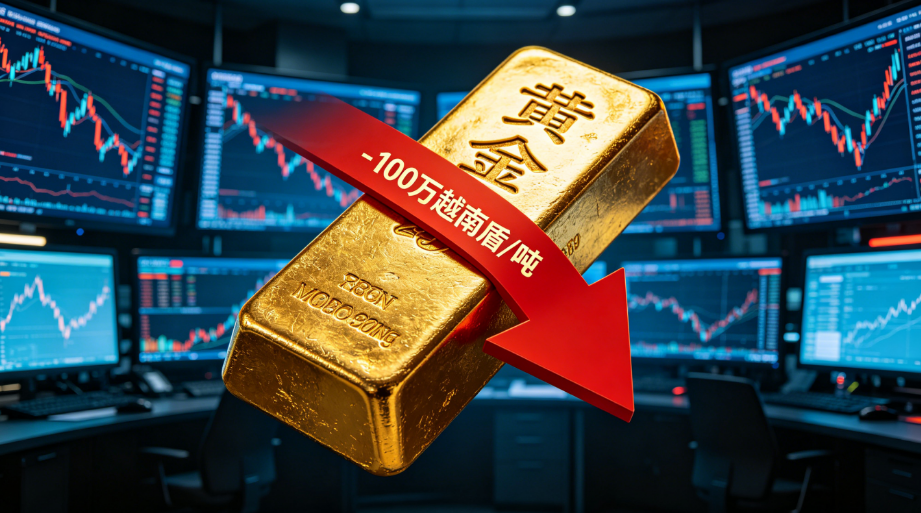
June 25: Domestic gold and silver prices plunge: pressure from international markets and dollar strength
Keywords:
gold price, silver price, SJC, DOJI, Phu Quy, Fed, USD, precious metals market, bid-ask spread, risk management
Introduction
On the morning of June 25, both gold and silver in the domestic precious metals market saw significant declines. Several large companies lowered their bid and ask prices for SJC gold, reflecting the direct impact of international market volatility and cautious investor sentiment.
This move is not a simple one-day price drop but indicates the rapid transmission mechanism between the international gold market, the dollar exchange rate, and domestic precious metal prices. When macro factors shift, domestic price adjustments are often amplified due to the specific liquidity and supply-demand structure of each brand.
Domestic gold follows international decline
As of noon on June 25, SJC gold bars in the domestic market were quoted at VND 143.2 million per tael for buying and VND 146.2 million per tael for selling, down about VND 800,000 per tael from the previous day.
At DOJI in Hanoi and Ho Chi Minh City, the company also lowered both bid and ask prices by VND 1 million per tael, bringing transaction prices to the VND 143-146 million per tael range. This is a notable decrease, indicating that dealers are repositioning prices following international trends rather than maintaining high spreads as in earlier phases.
Phu Quy SJC gold bar prices also fell from previous highs to around VND 142.5-146 million per tael, with the bid price down about VND 1 million per tael and the ask price down about VND 1.2 million per tael. When multiple brands adjust simultaneously, the market signal becomes clearer: short-term trend is biased downward.
Reason: international gold falls below $4,000 per ounce
Domestic price pressure stemmed from a sharp drop in international gold prices. On the same morning, Kitco showed international gold at around $3,997 per ounce, down about $100 per ounce from early the previous day, and officially losing the psychological threshold of $4,000 per ounce.
Technically, breaking through a major psychological level like $4,000 per ounce often triggers widespread profit-taking. Against the backdrop of already significant gold price gains, any adverse macro signal can quickly spread selling pressure, especially when many short-term investors use leverage.
Another important factor is dollar strength. When the dollar strengthens, gold priced in dollars becomes more expensive for investors holding other currencies, weakening investment demand. Meanwhile, market expectations regarding the US Federal Reserve's (Fed) monetary policy directly affect the market. The Fed's prolonged high-interest stance increases the opportunity cost of holding gold, as gold generates no yield.
Additionally, concerns about eased oil supply and defensive capital flows shifting also reduced gold's safe-haven appeal. Only when geopolitical uncertainty is strong enough to outweigh other financial drivers does the 'absolute safety' sentiment persist. In this session, this factor was insufficient to support gold prices.
Bid-ask spread structure and its impact on investors
One notable point in the domestic market is that bid-ask spreads remain at high levels. With SJC quoted at VND 143.2-146.2 million per tael, a spread of about VND 3 million per tael remains a significant barrier for short-term investors.
Technically, a large spread makes the market more sensitive to downside volatility. When prices turn downward, investors who bought at higher levels and have not gained enough to cover the spread quickly fall into temporary losses. This explains why every sharp drop typically triggers defensive sentiment, reduced short-term trading, and waiting for new trend confirmation.
Additionally, the Vietnamese gold market is influenced by brand characteristics. SJC gold bar prices and impact often differ from gold rings, and market sentiment is sometimes guided by the listed prices of leading enterprises. When SJC, DOJI, and Phu Quy all reduce prices, it becomes a trend confirmation signal, not just an independent movement of one brand.
Silver market also faces heavy decline pressure
Not only gold, but domestic silver also fell sharply, indicating that the correction wave is expanding across precious metals.
At Ancarat, 1-tael 999 silver was quoted at VND 2.16-2.22 million per tael, with the bid price down VND 18,000 per tael and the ask price down VND 19,000 per tael. A spread of about VND 60,000 per tael indicates the company maintains a relatively stable transaction safety margin.
For 1-kg 999 silver, Ancarat quoted VND 57.46-59.25 million per kg, down VND 496,000 per kg and VND 512,000 per kg respectively from the previous session. This is a large decrease, reflecting the synchronized movement of silver with gold when international capital simultaneously exits defensive assets.
Similarly, Phu Quy quoted 1-tael 999 silver at VND 2.16-2.22 million per tael and 1-kg at about VND 57.62-59.41 million per kg. Compared to the previous day, prices fell VND 477,000 per kg and VND 490,000 per kg.
This correction shows that silver is no longer just an industrial metal but is also strongly influenced by safe-haven capital flows. When global risk appetite improves or the dollar strengthens, silver often fluctuates more than gold due to its smaller market size and higher sensitivity.
Technical perspective: caution needed for short-term trend
From a technical analysis perspective, the drop on June 25 indicates that short-term trends for gold and silver are testing important support levels. If international gold cannot quickly return above $4,000 per ounce, domestic prices may continue to face pressure in the coming sessions.
However, it should be noted that gold remains a long-term defensive asset. A sharp decline does not necessarily mean the long-term uptrend is broken. The important thing is that investors must distinguish between technical correction and trend reversal. Amid continued volatility in interest rates, the dollar, and global economic data, chasing prices at highs is a risky strategy.
For individual investors, the currently suitable principles are:
- Closely monitor fluctuations in international gold prices and dollar exchange rates;
- Avoid emotional trading;
- Prioritize risk management over expecting quick price recoveries;
- Pay special attention to bid-ask spreads before making decisions.
Conclusion
Trading on June 25 clearly shows that domestic gold and silver markets are reflecting external pressures. International gold falling below $4,000 per ounce, a stronger dollar, and market expectations regarding Fed monetary policy have triggered a broad correction.
In this context, SJC, DOJI, Phu Quy gold and various 999 silver products all cut prices simultaneously, opening a more cautious phase for short-term investors and long-term holders. When precious metals markets enter high-volatility zones, the best strategy is not extreme prediction but patient observation, correct trend judgment, and disciplined risk control.