Title: Cham Culture in Khanh Hoa: Preserving Heritage, Spreading Values, and Promoting Sustainable Tourism
Keywords: Cham culture, Khanh Hoa, Cham heritage, heritage tourism, traditional craft villages, Cham towers, digital transformation, cultural preservation
Introduction
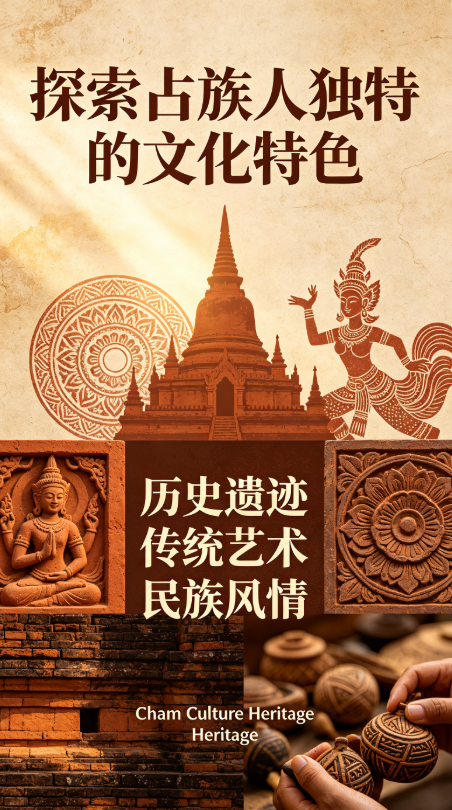
After centuries of formation and accumulation, the Cham community in Khanh Hoa province persists in safeguarding its unique cultural identity, encompassing traditional handicrafts, Cham tower architecture, religious rituals, as well as language, music, and cuisine. Not only preserving cultural heritage within the community, many tangible and intangible Cham heritage values are also being developed through innovative approaches for tourism, helping elevate Khanh Hoa's cultural influence on Vietnam's heritage tourism map.
As tourism shifts strongly towards sustainable development, local experiential products, and digital technology applications, Cham culture in Khanh Hoa is becoming a distinctive resource. It is not only a treasure trove of historical memory but also a driving force for economic development and a bridge connecting past and present, local communities with domestic and international tourists.
Rich and diverse Cham cultural treasure
Cham culture in Khanh Hoa is a multi-layered whole, embodying a long history, unique beliefs, and flexible adaptation to the living environment. Material culture is vividly reflected in traditional handicrafts such as brocade weaving and pottery. These products not only have practical value but also contain profound aesthetic connotations, reflecting the worldview, spiritual life, and social structure of the Cham people.
Patterns on Cham brocade often draw from nature, the cosmos, beliefs, and daily life. Each weave and every hue carries stories of the community and the skillful hands of artisans, especially highlighting the contributions of Cham women—who preserve part of the cultural essence through their looms. This entirely handmade process gives unique value to the products, making Cham brocade not just a commodity but a cultural symbol.
Similarly, Cham pottery is a vivid testament to the vitality of heritage. In many traditional craft villages, the entire production process—from kneading clay, shaping, decorating to firing—is still done entirely by hand. Continuation of traditional techniques not only retains the authenticity of the craft but also protects precious folk knowledge and passes it down through generations.
Traditional craft villages: from livelihood to distinctive tourism products
A noteworthy aspect of preserving Cham culture in Khanh Hoa is transforming traditional craft villages into tourism experience spaces. This is a correct path that creates more livelihoods for residents and allows heritage to live in contemporary life, rather than remaining only in exhibitions or memories.
In weaving and pottery craft villages, tourists can not only observe the production process but also participate in hands-on experiences. They can touch clay, try twisting threads and weaving, listen to artisans tell stories about the craft's history, the meaning of various patterns, and rituals related to production. These experiences bridge the gap between the audience and heritage, turning the visit into a learning and understanding process.
For local residents, craft village tourism brings opportunities to increase income, create jobs for younger labor, and secure more stable market channels for handicraft products. More importantly, when traditional crafts combine with tourism, the community becomes more motivated to preserve craft knowledge, pass on ancient techniques, and improve product quality. This lays the foundation for a sustainable development model where culture is not over-commercialized but harmoniously transformed into economic value.
However, to truly make craft villages attractive destinations, reasonable spatial planning, investment in visitor reception infrastructure, development of in-depth experience products, and training of younger generations are needed. Heritage preservation cannot stop at preserving external forms; it must also protect the environment for cultural practice, including raw material sources, production techniques, artisan groups, and market support mechanisms.
Khanh Hoa Cham towers: architectural imprint and spiritual depth
If craft villages showcase the labor and creative life of the Cham people, then Cham tower complexes vividly reflect their spiritual life, architectural art, and unique construction techniques. Khanh Hoa has long been known as the land of ancient towers and living heritage, preserving many buildings of special historical and artistic value.
Representative Cham towers such as Po Nagar Tower, Hoa Lai Tower, Po Klong Garai Tower, and others are not only famous for their rustic beauty but also embody a unique architectural language: square forms, upward-extending structures, and tower tops imitating sacred symbols of Hindu belief. The main building material is red fired brick, durable and tightly bonded, with masonry methods that still puzzle researchers today.
The value of Cham towers lies not only in the architecture itself but also in their role as centers of religious life. They are places where Cham people following Brahmanism perform sacrifices, rituals, and important festivals. The Kate Festival is one of the representative events, usually held in the seventh month according to the Cham calendar, attracting many local residents and tourists. Within the sacred space, traditional ceremonies, dances, music, and colorful costumes intermingle to create a vibrant cultural picture.
It is this combination of architectural, religious, and festival values that makes Cham towers a unique highlight for heritage tourism. Visitors come not just to admire the scenery but also to connect with a long-standing cultural value system where history lives not in books but vividly in daily life.
Music, dance, language, and cuisine: cultural depth of Cham characteristics
Cham culture in Khanh Hoa is not only striking in architecture and traditional craft villages but also possesses a distinctive treasure trove of music, dance, language, and cuisine. Traditional musical instruments, folk tunes, and Cham dances are highly expressive and closely tied to religious rituals and community activities. Cham dance movements are graceful, dynamic, and symbolic, making it one of the popular performing arts loved by tourists.
In terms of language, the Cham people use the Cham language and Akhar Thrah script, a writing system with a long history, which holds special value in historical, cultural, and ethnographic research. Ancient documents on paper, palm leaves, and other traditional materials preserved in local museums not only help protect precious resources but also help reconstruct the development process of Cham knowledge across periods.
Cham cuisine is also an attractive part of the heritage. From local ingredients, cooking methods to eating habits, it reflects the ecological environment and living customs of the community. When integrated into experiential tourism itineraries, cuisine becomes a friendly entry point for tourists to understand Cham culture while extending the local tourism value chain.
Digital transformation: expanding the space for heritage access
In the current trend of digital transformation, the preservation and promotion of Cham culture are no longer limited to traditional methods. The Department of Culture, Sports and Tourism of Khanh Hoa province has deployed technological solutions at some Cham heritage sites, helping visitors access information through QR codes, e-tickets, touchscreens, and digital heritage spaces.
This approach brings many benefits. First, it enhances the visitor experience, providing more multi-dimensional and intuitive information. Visitors are not limited to one-way explanations but can explore history, architecture, rituals, and folktales related to each site on their own. Second, digital technology helps reduce the burden on traditional interpretation infrastructure while improving the efficiency of heritage data management.
More importantly, digital transformation creates opportunities to widely disseminate Cham cultural values to domestic and international audiences. Once heritage is digitized, geographical boundaries no longer pose obstacles; values that could only be presented in specific spaces can now reach users everywhere. This approach fits the development context of modern tourism, where convenience, interactivity, and personalization are increasingly valued.
However, technology is only truly meaningful when placed within the right preservation strategy. Digitalization cannot replace living heritage; it should serve to protect and promote the authentic value of heritage. Therefore, this process needs to be combined with scientific research, talent training, community awareness raising, and ensuring the active participation of Cham people.
Conclusion
Cham culture in Khanh Hoa is a unique heritage that gathers values of history, art, belief, and community life. From brocade weaving villages, traditional pottery to ancient tower systems, from music, dance, language to cuisine, all together form a distinctive and charming cultural space. Preserving and promoting these values is not only a responsibility to the past but also a development strategy for the future.
In the process of building sustainable heritage tourism, Khanh Hoa has great opportunities to turn Cham culture into a signature brand, preserving heritage while creating livelihoods for the community and enhancing the locality's position on the tourism map. The harmonious combination of traditional values and modern technology will be the key for Cham culture to continue shining, making it an important internal driving force for economic and social development, and spreading profound humanistic values to a wide audience of domestic and international tourists.