Deepening Interconnection Mechanism: HK Stock Connect and SH-SZ Stock Connect Trading Data Reflect New Capital Market Landscape
Keywords: HK Stock Connect, SH-SZ Stock Connect, Turnover, Interconnection, Capital Market Opening
Introduction
On July 16, 2026, Hong Kong Exchanges and Clearing Limited (HKEX) released the latest data showing that in H1 2026, the average daily turnover of the Southbound Stock Connect (HK Stock Connect) reached HK$123.1 billion, up 10.9% year-on-year; the average daily turnover of the Northbound Stock Connect (SH-SZ Stock Connect) climbed to RMB 345.3 billion, with a year-on-year growth rate of 101.6%. This set of data not only reflects the continuous deepening of the interconnection mechanism between mainland and HK capital markets but also reveals strong global capital confidence in the resilience and vitality of China's economy. In the complex and changing international financial environment, the significant increase in activity of the SH-SZ-HK Stock Connect channels marks a new stage of development in China's capital market two-way opening. This article will provide an in-depth analysis of this phenomenon from four dimensions: data interpretation, driving factors, market impact, and future outlook.
1. Structural Changes Behind the Data: From Quantity to Quality
1.1 HK Stock Connect: Structural Optimization Amid Steady Growth
In H1 2026, the average daily turnover of HK Stock Connect was HK$123.1 billion, up 10.9% from HK$111 billion in the same period of 2025. Although this growth rate is not as explosive as that of SH-SZ Stock Connect, considering the limited size of the HK market and factors such as global liquidity contraction and geopolitical disturbances, achieving double-digit growth is commendable. Notably, the proportion of HK Stock Connect turnover in the total turnover of the HK main board has risen from about 12% in 2022 to about 18% in H1 2026, indicating a continuous increase in mainland investor participation in the HK market. From an industry distribution perspective, Southbound flows were most concentrated in technology, consumer, and financial sectors, highly consistent with mainland investors' preference for scarce HK targets (such as internet leaders and innovative drug companies).
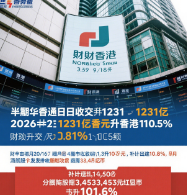
(Image Description: Year-on-year changes in average daily turnover of HK Stock Connect and SH-SZ Stock Connect in H1 2026, data source: HKEX)
1.2 SH-SZ Stock Connect: Acceleration of Cross-Border Capital Inflows
The growth of SH-SZ Stock Connect was astonishing: average daily turnover of RMB 345.3 billion, a year-on-year surge of 101.6%, nearly doubling. This growth rate far exceeded market expectations, driven by the combined force of three factors: first, since the end of 2025, China's macroeconomy has stabilized and recovered, with the manufacturing PMI staying in expansion territory for six consecutive months, improving corporate profitability and attracting foreign capital back; second, the safe-haven attribute of RMB assets in global asset allocation has become prominent, especially after the weakening of the US dollar in Q1 2026, international capital accelerated its shift to emerging markets; third, industrial breakthroughs in frontier fields such as artificial intelligence, new energy, and biotechnology have given rise to a number of globally competitive listed companies, becoming "core assets" for foreign capital allocation. As of the end of June 2026, cumulative net purchases through SH-SZ Stock Connect exceeded RMB 2.3 trillion, with holdings accounting for nearly 5% of A-share free float market capitalization.
2. Analysis of Growth Drivers: Policy, Market, and Institutional Resonance
2.1 Continuous Release of Institutional Dividends
Since its launch in 2014, the interconnection mechanism has undergone multiple expansions and optimizations. In 2025, the trading and settlement system of SH-SZ-HK Stock Connect was upgraded, raising the single order limit to RMB 5 million and introducing real-time settlement for block trades; at the beginning of 2026, the scope of ETF inclusion in Stock Connect was further expanded, covering more industry-themed funds. These institutional arrangements reduced cross-border transaction costs, improved capital turnover efficiency, and directly stimulated the rise in trading volume. In addition, the second version of the Cross-Border Wealth Management Connect, jointly promoted by the CSRC and SFC, allowed mainland individual investors to directly invest in Hong Kong funds through existing Stock Connect accounts, further broadening capital flow channels.
2.2 RMB Internationalization and Asset Allocation Demand
The explosive growth of SH-SZ Stock Connect turnover essentially reflects a systematic increase in the allocation ratio of RMB assets by global institutional investors. According to IMF data, the share of RMB in global foreign exchange reserves in Q1 2026 reached 3.8%, doubling from 2020. As Chinese bonds and stocks are included in major global indices (such as FTSE Russell, MSCI), the demand for passive tracking allocation has significantly increased. In H1 2026, about 60% of Northbound funds flowing through SH-SZ Stock Connect came from long-term institutions such as pension funds and sovereign wealth funds, with holding periods typically over three years, indicating recognition of the long-term value of the A-share market.
2.3 Market Rotation and Structural Trends
In H1 2026, the A-share market exhibited significant structural trends: technology growth sectors such as semiconductors, computing power, and autonomous driving led the gains, with the Shanghai Composite Index rising 8.2% cumulatively and the ChiNext Index up 15.6%. Meanwhile, the HK market benefited from mainland economic recovery and the end of the Fed's rate hike cycle, with the Hang Seng Index rising 9.7% during the same period. The rotation effect between the two markets attracted arbitrage capital to allocate across markets through Stock Connect. For example, when A-share semiconductor sector valuations were high, some capital shifted to similar targets in HK with lower valuations, and this seesaw effect objectively amplified turnover.
3. Impact on Both Financial Markets: From Channel to Ecosystem
3.1 Reshaping the HK Market Ecosystem
The steady growth of HK Stock Connect turnover is changing the investor structure and pricing logic of the Hong Kong market. For a long time, the HK market was mainly dominated by overseas institutions, with low participation from mainland investors. However, with the continuous influx of Southbound funds, the HK market has gradually formed a dual-driven pattern of "mainland + international." In H1 2026, the average daily net purchase of Southbound funds reached HK$3.8 billion, and their holdings in Hang Seng Index constituents exceeded 12%. The preferences of mainland investors (such as focusing more on growth and rapid response to policy expectations) have profoundly affected the valuation system of HK stocks: the P/E ratio of some small and mid-cap tech stocks increased from 10-15 times evaluated by overseas institutions to 20-25 times, reflecting the strengthening pricing power of mainland capital.
3.2 Driving A-Share Internationalization
The explosive growth of SH-SZ Stock Connect has further accelerated the internationalization process of A-shares after their formal inclusion in the MSCI Emerging Markets Index. As of the end of June 2026, the market value of Northbound holdings was about RMB 4.5 trillion, accounting for 4.8% of A-share free float market capitalization, up from 1.5% in 2017. The deep participation of foreign capital not only brings incremental funds but more importantly introduces mature market investment concepts: focusing on ESG ratings, emphasizing corporate governance, and paying attention to the sustainability of dividend policies. Some A-share listed companies have begun to proactively adjust their investor relations management strategies, regularly publishing English financial reports or holding international roadshows, a phenomenon almost unseen ten years ago.
3.3 Enhanced Risk Management and Linkage
Two-way fund flows also bring new challenges. In H1 2026, as the scale of Northbound funds expanded, the intraday correlation coefficient between A-shares and HK stocks rose from 0.65 to 0.78, and the "herd effect" of cross-border capital flows sometimes appeared. For example, in March, when the Fed released a hawkish signal, Northbound funds net sold over RMB 12 billion in a single day, causing the A-share semiconductor sector to fall 3.2% that day, and the Hang Seng Tech Index to drop simultaneously. This suggests that regulators need to further improve the monitoring and early warning mechanism for cross-border capital flows while optimizing trading mechanisms: for example, the "volatility market price mechanism for Stock Connect" being studied by HKEX aims to set a cool-down period under extreme market conditions to prevent short-term speculative capital from impacting the market.
4. Future Trends and Policy Recommendations
4.1 Trading Scale Still Has Room for Growth
From an international comparison perspective, the current proportion of SH-SZ-HK Stock Connect's average daily turnover relative to the total turnover of both markets still has room to increase. In the US market, for example, cross-border trading at the NYSE and Nasdaq accounts for more than 30%, while the comprehensive proportion of SH-SZ-HK Stock Connect is currently only about 15%. As China's economic size as a share of global GDP continues to rise (estimated to reach 20% in 2026) and RMB internationalization deepens, foreign capital's allocation to A-shares is expected to increase from the current 4.8% to about 10% by 2030, corresponding to an average daily turnover that may exceed RMB 600 billion. For HK Stock Connect, considering the major trend of mainland residents shifting asset allocation from real estate to financial assets, the annual increment of Southbound funds is expected to maintain around HK$300-400 billion.
4.2 Deepening Interconnection Still Requires Institutional Innovation
Despite remarkable achievements, the interconnection mechanism still has some pain points: first, the mismatch of trading days: when mainland holidays are open but Hong Kong is closed, Northbound funds cannot trade, leading to loss of arbitrage opportunities; second, the impact of RMB exchange rate fluctuations on investment returns: currently, SH-SZ Stock Connect transactions are denominated in RMB, but overseas institutions bear exchange rate risk; third, the interconnection of derivatives markets is still in its infancy, with only index futures linked products launched, while options and structured products have not yet been connected. It is recommended that the two sides promote "unified trading calendar" and explore launching cross-border exchange rate hedging tools (such as RMB FX options) to reduce foreign capital transaction costs.
4.3 Preventing Risks of Large Capital Inflows and Outflows
Part of the ultra-high growth rate of SH-SZ Stock Connect in H1 2026 came from short-term arbitrage funds. According to statistics, the average daily turnover rate of Northbound funds has risen from 0.8% in 2022 to 1.5% in H1, indicating that some trading behavior has become short-term oriented. Regulators should strengthen look-through supervision, verify accounts suspected of cross-border market manipulation, and improve the "cool-down period" mechanism of Stock Connect. In addition, it is recommended to include SH-SZ Stock Connect in the macroprudential management framework, and when the net buy/sell of Northbound funds exceeds RMB 20 billion in a single day, trigger a temporary risk warning to guide rational market expectations.
Conclusion
The "report card" of HK Stock Connect and SH-SZ Stock Connect in H1 2026 is a microcosm of China's capital market moving from "interconnection" to "deep integration." Behind the figures of HK$123.1 billion and RMB 345.3 billion are continuous improvement of institutional design, active adaptation of market participants, and global capital's revaluation of China's economy. Looking ahead, with the deepening of financial collaborative development in the Guangdong-Hong Kong-Macao Greater Bay Area and the pilot application of digital RMB in cross-border payments, the SH-SZ-HK Stock Connect is expected to upgrade from a simple trading channel to a comprehensive cross-border financial platform covering securities, funds, bonds, and derivatives. In this process, finding a balance between openness and security, efficiency and stability will be a common challenge for all market participants. Through these impressive data, we see not only accelerated capital flows but also the firm steps of China's financial system towards maturity and the world.