Deepening Interconnection: H1 Trading Data of HK Stock Connect and SH-SZ Stock Connect Reveal New Landscape of Mainland and HK Capital Markets
Keywords
HK Stock Connect, SH-SZ Stock Connect, Interconnection, Average Daily Turnover, Capital Market Opening, Northbound Funds, Southbound Funds
Introduction
On July 16, 2026, Hong Kong Exchanges and Clearing Limited (HKEX) released the latest data, revealing a significant increase in trading activity under the interconnection mechanism in the first half of the year. The data shows that the average daily turnover of the Southbound Stock Connect (HK Stock Connect) reached HK$123.1 billion in H1, up 10.9% year-on-year; while the average daily turnover of the Northbound Stock Connect (SH-SZ Stock Connect) reached RMB 345.3 billion, surging 101.6% year-on-year. This set of data not only reflects the continuous deepening of two-way opening of mainland and HK capital markets but also signals accelerated global capital confidence in China's economy and Chinese assets.
Against the backdrop of deglobalization and increased geopolitical volatility, China's capital market opening-up pace has not slowed down. Instead, through institutional innovation and mechanism improvement, it has provided more convenient and efficient cross-border investment channels for international investors. This article will provide an in-depth analysis of the H1 interconnection operation from multiple dimensions, including data interpretation, market drivers, institutional evolution, and future outlook.
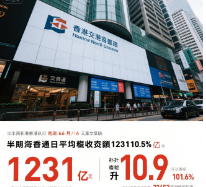
Image Description: HKEX trading data display screen, reflecting capital flow status under the interconnection mechanism in real time.
1. Data Panorama: Two-Way Expansion of Northbound and Southbound Funds
1.1 Southbound Funds: Steady Rise in HK Stock Connect Daily Turnover
HKEX data shows that the average daily turnover of Southbound Stock Connect (the channel for mainland investors to invest in HK stocks) in H1 was HK$123.1 billion, an increase of 10.9% from HK$111 billion in the same period of 2025. Although this growth rate is not as explosive as that of Northbound Stock Connect, considering the capacity and liquidity characteristics of the HK market itself, a 10.9% year-on-year increase is already considerable.
From a structural perspective, the growth in Southbound turnover came from two dimensions: first, the number of participating investors continued to increase, especially institutional investors' willingness to allocate to high-quality HK stocks through the Stock Connect; second, the activity of new economy sectors such as technology, healthcare, and consumer in the HK market increased, attracting mainland capital. Notably, the Hang Seng Index showed an overall volatile upward trend in H1 2026, with Southbound funds actively bottom-fishing during low valuation phases and taking profits moderately during rebounds, reflecting mature trading strategies.
1.2 Northbound Funds: SH-SZ Stock Connect Turnover Doubles, Foreign Capital Accelerates Entry
More impressive data came from Northbound funds. The average daily turnover of SH-SZ Stock Connect in H1 reached RMB 345.3 billion, an astonishing 101.6% year-on-year increase. This means that the average daily turnover of Northbound funds has more than doubled compared to the same period last year.
Behind this data are multiple overlapping factors:
-
First, the resilience of China's macroeconomy became apparent. In H1 2026, China's GDP growth remained around 5%, with industrial production, consumption recovery, and export resilience exceeding market expectations. The International Monetary Fund (IMF) raised its forecast for China's economic growth in its latest World Economic Outlook, enhancing foreign capital's willingness to allocate to Chinese assets.
-
Second, the safe-haven attribute of RMB assets strengthened. Against the backdrop of divergent monetary policies among major global economies and frequent geopolitical conflicts, the RMB exchange rate remained relatively stable, Chinese government bond yields were attractive, and A-share market valuations were in low historical ranges, making them an important choice for global capital seeking safe havens and allocation.
-
Third, the release of capital market reform dividends. Full implementation of the registration system, improvement of the delisting system, and the landing of dividend and buyback incentive policies all enhanced the investment value of the A-share market. At the same time, international indices such as MSCI and FTSE Russell continued to increase the weight of A-shares, with passive and active funds forming a joint force.
-
Fourth, the continuous expansion of SH-SZ Stock Connect targets. The Shanghai and Shenzhen Stock Exchanges continuously optimized the interconnection mechanism, incorporating more high-quality targets from the STAR Market and ChiNext, providing foreign capital with a richer selection of investment options.
Image Description: Distribution of SH-SZ Stock Connect fund flow in H1 2026, showing industry sectors that foreign capital focused on adding positions.
2. Structural Characteristics: Industry Preferences and Trading Behavior Analysis
2.1 Southbound Funds: Focus on Technology and High Dividend
From an industry distribution perspective, Southbound funds in H1 focused on information technology, non-essential consumer goods, and financials. Among them, internet giants such as Tencent, Meituan, and Xiaomi remained core allocations, while high-dividend blue chips like China Mobile and CNOOC also received sustained net buying. This reflects mainland investors' investment logic of pursuing both growth and defensiveness.
2.2 Northbound Funds: Balanced Allocation, Equal Emphasis on Growth and Value
On the SH-SZ Stock Connect side, Northbound funds showed a pattern of "blossoming in many areas" in H1. Sectors such as electrical equipment, food and beverage, pharmaceuticals and biology, and electronics saw large net buying amounts. Foreign capital maintained high holdings of leading stocks like CATL, Kweichow Moutai, and Mindray Medical, while also beginning to allocate to industrial upgrading directions such as semiconductors, artificial intelligence, and new energy. Notably, since the second quarter, Northbound funds' allocation to financial stocks like banks and insurance has rebounded, indicating marginal improvement in expectations for economic recovery.
2.3 Changes in Trading Behavior: From Passive Following to Active Management
A noteworthy phenomenon is that the trading strategy of Northbound funds is shifting from early "index-based passive allocation" to "active stock selection plus sector rotation." Data shows that the average daily turnover rate of Northbound funds increased in H1, and the difference in buy and sell amounts among individual stocks widened, indicating that foreign capital's research depth on A-shares is deepening, not solely relying on index weights for mechanical allocation. This trend has positive implications for improving the pricing efficiency of the A-share market.
3. Institutional Evolution: Continuous Upgrades of the Interconnection Mechanism
3.1 Optimization of Trading Products and Settlement Arrangements
HKEX and the Shanghai and Shenzhen Stock Exchanges have continuously optimized the interconnection mechanism in recent years. Products such as stocks, bonds, ETFs, and derivatives have been gradually included, providing investors with diversified choices. At the same time, coordination of trading calendars, shortening of settlement cycles, and reduction of transaction costs have improved the convenience of cross-border trading. Particularly, the upgrade of the "Swap Connect" launched at the end of 2025 further facilitated foreign capital's risk management needs.
3.2 Strengthened Cross-Border Regulatory Cooperation
The expansion of interconnection scale cannot be separated from regulatory coordination. The China Securities Regulatory Commission (CSRC) and the Hong Kong Securities and Futures Commission (SFC) and HKEX have established a regular information sharing and enforcement cooperation mechanism. In H1 2026, the two sides jointly conducted special inspections targeting cross-border market manipulation and insider trading, effectively maintaining market order. This institutional safeguard is an important cornerstone of international investor trust.
3.3 Interaction between RMB Internationalization and Interconnection
The sharp increase in SH-SZ Stock Connect turnover is essentially a microcosm of the RMB internationalization process. Foreign capital buying A-shares through the Stock Connect needs to convert foreign currency into RMB first, directly promoting the use of RMB in cross-border trade and investment. In H1 2026, the share of RMB in global payments rose to 4.5%, and its proportion in foreign exchange reserves also steadily increased. The opening of capital markets and RMB internationalization formed a virtuous cycle.
4. Global Comparison: China's Capital Market Attractiveness Stood Out
Placing the H1 data under a global perspective better highlights its significance. In H1 2026, major global stock markets showed divergent performances: US stocks continued to rise driven by the AI boom but with increased volatility; European stocks performed flat due to energy crisis and manufacturing weakness; among emerging markets, India and Vietnam maintained high growth, but foreign capital inflows were far smaller than China's.
The average daily turnover of SH-SZ Stock Connect of RMB 345.3 billion (approximately US$48 billion) even exceeded the total daily average turnover of some developed country stock markets. This highlights the core position of China's stock market in global asset allocation. International investment institutions have raised their allocation weights for Chinese assets, with BlackRock, Goldman Sachs, Morgan Stanley, etc., all issuing reports emphasizing that "Chinese assets cannot be ignored."
Image Description: Comparison of net foreign capital inflows in major global emerging markets in H1 2026, with China's A-share market leading.
5. Challenges and Outlook: The Next Decade of Interconnection
5.1 Potential Risks and Responses
Despite impressive data, the interconnection mechanism still faces several challenges: first, uncertainties in the external environment, such as US elections, geopolitical conflicts, and recurring global inflation, may trigger short-term capital fluctuations; second, issues of market depth and liquidity, as participation in some small and mid-cap targets by Northbound funds remains low; third, exchange rate risks, as two-way RMB fluctuations may affect foreign capital's holding willingness.
In response, regulators have taken multiple measures: expanding the scope of market makers, introducing more long-term capital, and improving risk hedging tools. Looking ahead to the second half of the year, with expectations of a Fed rate cut and stabilization of China's economic recovery, trading activity in SH-SZ Stock Connect and HK Stock Connect is expected to remain high.
5.2 Long-Term Trend: From "Channel" to "Integration"
The interconnection mechanism has been operating for more than ten years, and its positioning is evolving from a "cross-border investment channel" to a "capital market integration infrastructure." In the future, deeper integration such as unified trading hours, converging market access rules, and aligned information disclosure standards may be achieved. This will not only enhance the international competitiveness of both markets but also provide global investors with a more efficient, transparent, and diversified asset allocation platform.
Conclusion
The trading data of HK Stock Connect and SH-SZ Stock Connect in H1 2026 is a concentrated manifestation of the results of interconnection between mainland and HK capital markets. The year-on-year doubling of Northbound daily turnover and steady growth of Southbound turnover together depict a new picture of China's capital market opening. This achievement is attributable to the strong resilience of China's economy, continuous deepening of institutional innovation, and the transformation of global capital's perception of RMB assets.
Standing at a new starting point, we have reason to believe that with continuous optimization and upgrading of the interconnection mechanism, China's capital market will play an even more important role in the global financial system. For investors, understanding and making good use of this cross-border investment channel will be a key step in seizing China's development opportunities and achieving global asset allocation.
(Full text approximately 2,232 words)